CBD Vaporizer One-Stop OEM
The Ultimate Solution
Build a stronger CBD brand with hardware that performs. We develop and project-manage disposable vape hardware for brands like yours, with regulated production executed by qualified manufacturing partners. find out how we can work together.
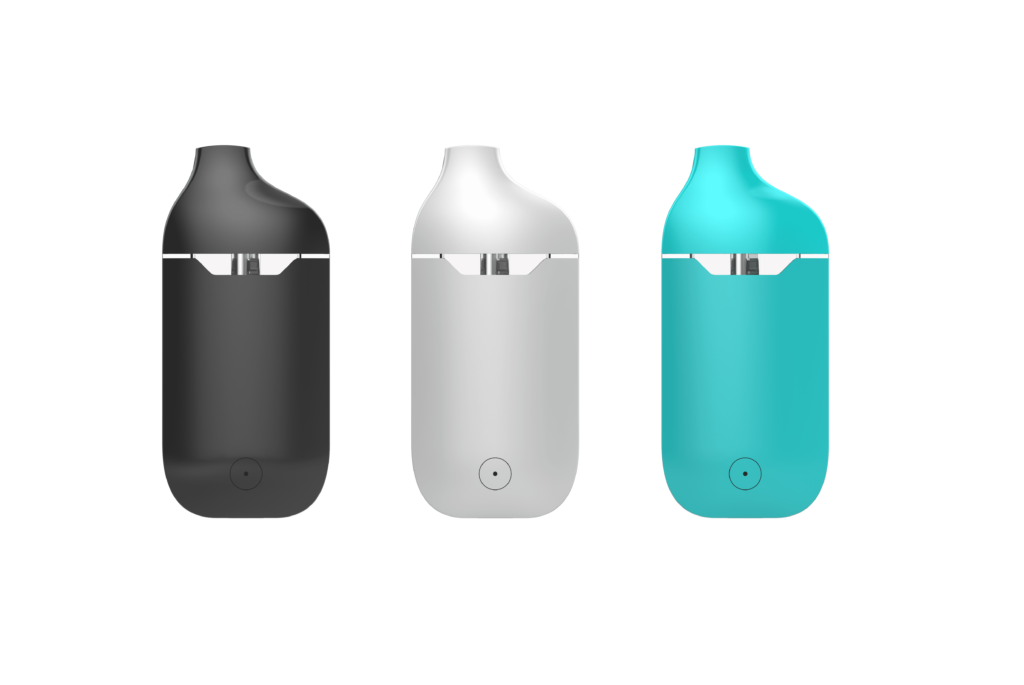
Why choose Pulse?
We develop disposable CBD vape hardware and coordinate production through qualified manufacturing partners using screened raw materials; every batch follows our written QC requirements. Over the past few years, our hardware has shipped to CBD-legal markets across the US and Canada.
What international certification standards have the suppliers we work with passed?
Certifications sit with the factories that physically build the hardware, and we would rather say that plainly than imply otherwise.
Quality-management, cleanroom and material documentation — ISO 9001, ISO 13485 / GMP, RoHS / CE / FDA food-grade, heavy-metal screening — sits with the individual factories that hold it, and we pass on the copies they release for your file. Cells ship with UN38.3 test reports and an MSDS/SDS from the cell supplier. Transport classification depends on the exact device and cell combination in your order — a standalone cell and a cell contained in equipment are classified differently — so we confirm and issue the documents that apply to your build before the shipment is booked.
ShenZhen Pulse Technology Co., LTD operates as the export and brand-facing company rather than the licence holder. The China Tobacco Monopoly Production Enterprise Licence is held by our commissioned manufacturing partners — customs declaration requires it, which is exactly why those partners must cooperate with formal declaration for the partnership to work at all. We supply copies of that licence and the battery transport documents on request, and once an order is confirmed we provide the documentation your customs broker needs and the authorisation your logistics provider requires to declare the shipment. We also welcome third-party inspection by SGS, QIMA or your nominated agency — tell us when your inspector wants to come and we will arrange factory access.

How do we control the quality and safety?
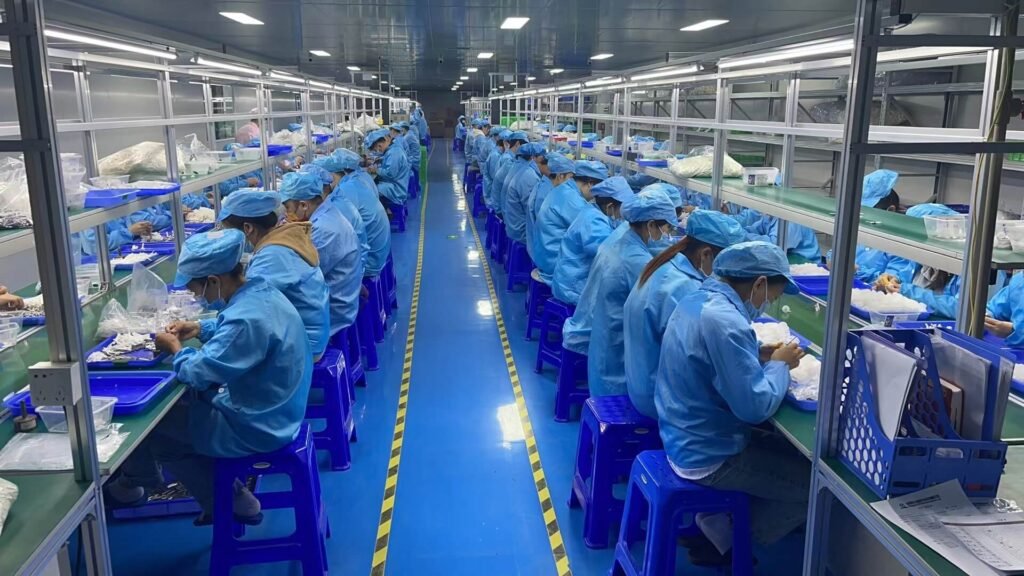
Every Pulse pen is made on automated lines with documented quality control at each stage: raw materials are checked on arrival, parts are screened during assembly, and finished units are tested before packing. We also audit our supply chain and re-qualify suppliers on a fixed schedule, so the materials behind your order are verified, not assumed.

Every Pulse product is built from specified materials, tested in-house before shipping. Material documentation for your order — RoHS, CE and FDA food-grade where issued — is passed on from the factory that holds it.
Core cartridge components are made from 304 stainless steel, chosen for its corrosion resistance.
Material quality and safety come first. We use screened materials and test for heavy metals with reference to the limits applied under California and Michigan regulations, and finished units are checked before packing rather than assumed clean.
All Pulse CBD products are made with high-quality batteries. Each unit goes through a capacity test, a short circuit test, a shock test, an extrusion test and a heat test before it is released. In addition, battery safety documents travel with each shipment: UN38.3 test reports and an MSDS/SDS for the cell actually used, plus the air or sea transport classification that applies to your exact device and cell combination. Pulse products are manufactured under documented safety control.
How to achieve atomization of CBD oil replacement without clogging?
The oil permeability of the ceramic core is one of the most important factors affecting atomization effect and vapor volume. We use a ceramic heating formula with a high-temperature manufacturing process that forms countless nano-scale pores across the heating body. The pore structure is sized for viscous distillate rather than thin e-liquid, so oil is absorbed quickly and the airflow channels stay clear instead of clogging.
Heat transfer is fast and even across the ceramic core. The integrated coil’s resistance, spacing and turn count are tuned during production so heat spreads quickly and uniformly — producing steady vapor without hot spots or scorching.
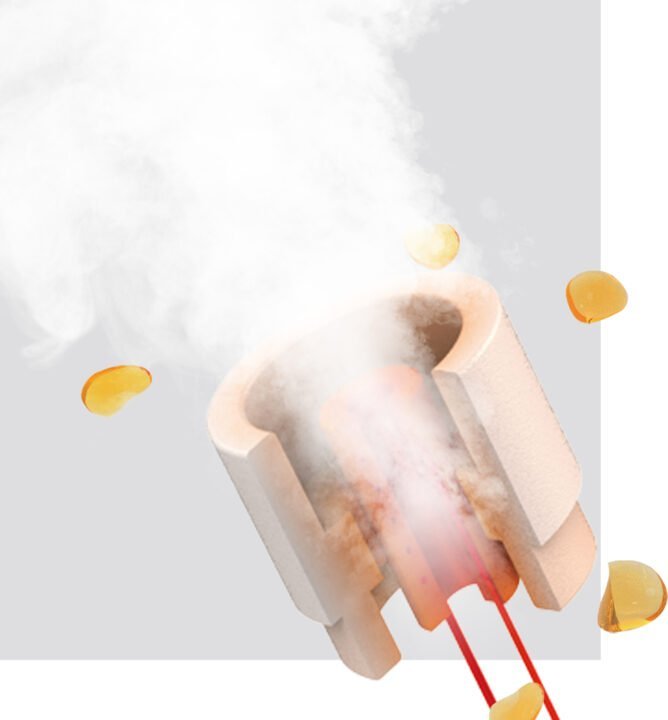
Our ceramic core: what is actually different
Most “ceramic” cartridges on the market wrap a ceramic body around a cotton wick, or copy a single-channel ceramic geometry. Ours does neither.
We build on a ceramic core developed by our core-development partner — a specialist in ceramic-core development. The design is developed in-house and is not licensed to other manufacturers. It is a structurally different design, and four things follow from that structure:
- No cotton wrap. Removing the cotton step removes a manual assembly operation, and manual operations are where unit-to-unit variation comes from. Flavour carries through the core instead of being filtered by wick material, and there is no cotton to char or collapse.
- Three channels in the ceramic body. The sintered body carries a central vertical channel that houses the heating element, with two side channels alongside it that feed oil and let the core equalise pressure as it heats — so oil reaches the heating surface by more than one path instead of a single bore.
- The heating element is kept out of the oil reservoir. The element runs inside the core and oil is drawn to it through the ceramic, so the stored oil is not held against the heat source while the device is in use. With distillate that separation is worth having: the aromatic fraction is the part heat affects first.
- Postless, dual-airflow on the D159 / D160 class. The vapour path does not pass through a central post, which shortens the route from core to mouthpiece and reduces the surface area oil can cling to and clog.
Core specifications
| Parameter | Specification | Notes |
|---|---|---|
| Core material | Porous ceramic, cotton-free, with a nickel-chromium heating wire | No wick wrap; no manual cotton step |
| Porosity — tri-channel core | 55% ± 5 | Higher pore volume, so a viscous oil has somewhere to go |
| Porosity — standard single-bore core | 40–50% | Single-layer compromise between wicking and sintered strength |
| Pore size — tri-channel core | 8 µm | Specified together with the porosity above, not taken from a catalogue |
| Pore size — standard single-bore core | 20–40 µm | Sized for viscous distillate, not thin PG/VG |
| Ceramic body channels | Three vertical channels (tri-channel core) | One central channel for the heating element plus two side channels for oil feed and pressure equalisation; standard single-bore cores use a single central bore |
| Heater resistance | 0.8–1.2 Ω across current models (0.95 Ω on one of them) | Specified per model and against your oil and device architecture — not one fixed figure |
| Cell intake (selected models) | 1.8–2.0 mm, 4-hole | Model-dependent |
| Preheat / working voltage | 1.8–3.1 V typical | Customisable to your specification; one customer programme runs at 3.3 V |
| Airflow | Postless, dual-airflow | D159 / D160 class |
| Oil compatibility | CBD distillate, viscous formulations | Not intended for thin e-liquid |
| Housing steel | 304 stainless steel | Core cartridge assembly |
Cotton-wrapped vs. generic ceramic vs. our ceramic core
| Cotton-wrapped wick | Generic ceramic core | Our ceramic core | |
|---|---|---|---|
| Wick | Cotton, hand-fitted | Ceramic body around cotton, or a copied single-channel geometry | Cotton-free porous ceramic |
| Clogging with thick distillate | Common — cotton collapses and chars | Better, but single-path intake still restricts flow | Three-channel ceramic body keeps the feed open |
| Flavour fidelity | Filtered by wick material | Partial wick filtering remains | Carries through the core |
| Unit-to-unit consistency | Manual cotton step introduces variation | Varies by vendor | Automated core, no manual cotton step |
| Airflow path | Through central post | Through central post | Postless on D159 / D160 class |
| Voltage window | Narrow, wattage-sensitive | Moderate | 1.8–3.1 V typical, customisable |
This comparison describes structural and airflow differences only. It contains no measured performance comparison, because we do not have third-party bench data for one.
Samples and timelines
- Blank / white-label units: 2–3 days to your nominated forwarder.
- Standard samples: 2–8 days.
- Samples with paid logo printing: 5–7 days.
- Mass production: 20–25 days after deposit confirmation, with a confirmed schedule issued before production starts.
Judge the core on your own oil
We would rather you test the core than take a number from us. Tell us what you are formulating and we will send you our ceramic core alongside a conventional core, so you can vape both with the oil you actually sell.
Our factory-side comparison and our customers’ feedback point the same way — but your oil, your power settings and your climate are the only test that matters for your product. We welcome the comparison — judge it yourself, and tell us what you find.
Our hardware is designed for thick CBD distillate-style oils and is not suited to nicotine e-liquids.
Scope: empty vape hardware only. We do not supply, fill or sell oil, nicotine or e-liquid.
For a deeper walkthrough of core geometry, oil viscosity and how to specify a cartridge that does not clog, read Why Ceramic Cores Clog — and How to Choose One That Doesn’t.
Estimated OEM Price
All payments to Pulse are secure. Here is a summary of the costs you can expect:
Sample units are available at a small cost — enough to cover one sample device and its shipping. Ordering several samples costs a little more.
If you need us to arrange shipping, this covers moving your order from our manufacturing partner’s production facility to your door — freight, customs clearance and related fees. We handle the paperwork and recommend the best route for your market.
Pay 30% of the total as a deposit to start production; the remaining 70% is settled before shipment.
Balance payment is due before your order leaves the factory. Once settled, we ship on schedule.
Estimated manufacturing and shipping times
Here is how an order moves through our manufacturing partner’s production facility, from design confirmation to delivery:
Design and manufacturing time
Once your design or brand concept is confirmed, we source components to your specification and build your product through our standard production flow. You receive a confirmed schedule before we start.

Packing and boxing all products time
Finished units are packed into cartons with protective inserts, then sealed and labeled for shipment.

Custom clearance and loading time
Orders are loaded and trucked to the port or airport, cleared through customs, then handed to the carrier for your destination.

Air and sea transportation time
When your shipment reaches the destination, you receive a delivery notice and can arrange collection or final-mile delivery.
Do you provide free delivery services for e-cigarettes?
No — shipping is charged at cost. The fee depends on your destination and order size, and we quote it clearly before you pay.
How do you handle shipping, damage and delays?
Freight is charged at cost, never as a hidden margin. Before you place the order we confirm the cost for your destination and order size, and we quote it clearly before you pay. Production runs 20-25 days for a standard order with custom branding; blank hardware can move faster. If a unit still arrives damaged, send photos within 48 hours of delivery and we will arrange a replacement or refund.
Can you replace a product damaged in the delivery process?
We pack every order to survive international shipping. If something still arrives damaged, contact us with photos within 48 hours of delivery and we will arrange a replacement or refund.
How long will it take for me to receive the goods I ordered?
Standard orders ship within 20-25 days after deposit confirmation. Custom orders may take a little longer depending on design and quantity — we set a confirmed schedule before production starts.
What do I do if my order is delayed?
If an unexpected event delays your order, we will tell you as soon as we know and give you a revised date. If your order runs more than a week past the confirmed schedule, contact us and we will sort it out.
Contact Pulse to start your business

We reply within one business day with pricing, samples and a production schedule.