
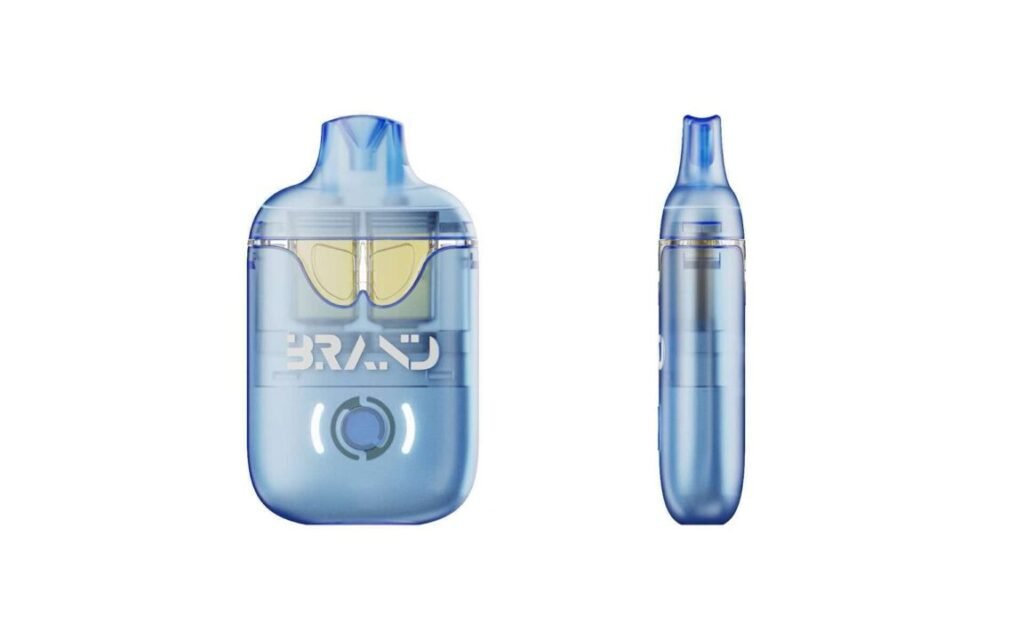
If you sell CBD under your own brand, the hardware is the part your customer holds. A leaking tank or a dead battery is remembered long after the flavor is forgotten. Choose a weak cbd vape pen manufacturer and you pay twice: once in defective stock, once in your brand’s reputation. Choose a solid one and most of those problems never reach you.
This checklist comes from both sides of the table. Our team at ShenZhen Pulse Technology has worked in the CBD vape industry for more than 10 years, and we have watched brands save — and lose — real money on this single decision. Pulse has focused on vape hardware product development and OEM/ODM projects since 2020, working with qualified manufacturing partners in Shenzhen for regulated production. We supply hardware only: we do not supply or fill oil, and we will not pretend otherwise.
Below is what we ask every buyer to verify before they commit, whether they end up working with us or with someone else.
1. Start with your product brief, not the price list
Most inquiries we receive begin with “what’s your price?” The useful ones begin with a short brief. That brief decides which manufacturer fits, so put it together before you compare quotes:
- Capacity and format. Are you planning 0.5 ml, 1 ml, 2 ml, or 5 ml disposables? Dual-tank and smart-screen models sell in different channels, so decide which market you are serving first.
- Quantity. Your forecast decides whether you meet a factory’s MOQ comfortably and how the lead time is planned.
- Customization. Do you need a logo and packaging only, or full design work on the hardware itself?
- Where you sell. The rules in your target markets limit which products you can even use, so know them before you buy hardware.
You do not need a finished design to talk to a factory. You need enough clarity that a manufacturer can answer with a concrete plan instead of a generic pitch.
2. Verify the factory, not just the website
Anyone can put a clean workshop photo on a website. Verification happens before the order, not after a problem shows up. Here is what we suggest checking:
Location and scale. Where is production actually located, and can you visit? Our office and the production facility used for Pulse-managed projects are both in Bao’an District, Shenzhen — our office is in Xinqiao, and production is carried out at our qualified manufacturing partner’s facility on Liyuan Road in Fuyong. Qualified buyers can discuss an in-person visit or a live ZOOM production tour before ordering.
What is made in-house. Ask which steps the factory controls under its own roof and which parts are bought in. A CBD vape manufacturer that assembles and tests in-house answers defect questions faster than a trading company coordinating three subcontractors.
What photos cannot show. Ask for a live call or video of the actual line and recent batch records. A supplier who hesitates to show the floor usually has a reason.
3. Ask exactly how quality control runs
“We have strict QC” is not an answer. The useful questions are: who tests, how many units, at which stage, and what happens to failures?
Here is how our QC is structured, as a concrete example. When we develop a new model, three batches go out before the product reaches the market:
- The first 100 units are tested at our partner lab in the US.
- The next 200 units go to partner brands and oil producers for real-use testing.
- The next 500 units are distributed through partner retail channels, so we collect end-user feedback before scale production.
Production only scales after all three stages pass. Regular runs are checked against written procedures: raw materials are screened batch by batch, and finished pens are tested for airflow, battery, and heating consistency before packing. Our heating cores use tri-channel ceramic atomization, which is why consistency issues are rare — the core absorbs thick oil quickly and keeps flavor clean from the first puff to the last.
We also keep a partner lab and warehouse in the US, so testing is independent and sample units of our main models are stocked for quick US delivery. Ask your shortlist what their equivalent process is. If they cannot describe it in concrete numbers, treat that as a red flag.
4. Check MOQ, lead time, and payment terms in writing
This is where vague suppliers become expensive. Three numbers matter most, and all three should be confirmed in writing before any deposit:
- MOQ. Ours is 3,000 pcs per model. That keeps pricing reasonable and production efficient.
- Lead time. 20-25 days for standard orders, depending on quantity and customization. We confirm a schedule before production starts.
- Payment. 30% deposit by T/T to begin production, and 70% balance before shipment.
Ask the same three numbers from every candidate so you compare like for like. Also ask what happens if a shipment is late or defective. A manufacturer with a defined rework or replacement process is far easier to work with than one that improvises after the problem appears.
5. Agree on what “customization” actually includes
Customization is not one thing. In disposable vape hardware it splits into two very different buckets:
Branding and packaging
Your logo, colors, cartons, and retail-ready design. Almost every serious supplier does this, and it is the easy part of the process.
Hardware-level changes
Capacity, airflow, mouthpiece shape, and electronics such as a smart screen or adjustable voltage. These affect tooling and testing, and they separate a real manufacturer from a reseller who only prints labels.
We run eight flagship models — from 0.5 ml pens to 5 ml smart-screen devices and a dual-tank design — and the full catalog covers 20+ models, all customizable. Send us a design brief and we usually come back within about a week with a workable plan and samples. If the customization you need sits at the hardware level, make sure the company you choose can engineer it, not just brand it. You can see the current line-up on our CBD vapes solution page.
6. Keep compliance on your side of the table
This is the boundary that protects both sides. We develop empty vape hardware and coordinate production through qualified manufacturing partners, and we do not supply or fill oil. Oil, filling, and product compliance stay with you or your licensed partners.
That is not a limitation — it is how serious brands prefer to work. Compliance for CBD products varies by state in the US and by country in Europe. In the US, for example, the 2018 Farm Bill made hemp-derived products legal at the federal level, while FDA has not approved CBD products as dietary supplements, and state rules differ from one another. These rules change over time, so treat this as a reminder to verify current requirements for every market you sell into — with your own legal counsel, not with a supplier’s sales sheet.
If a manufacturer pushes you toward supplying the oil or handling filling “for you,” walk away. That offer usually means compliance is not being watched closely. Keeping hardware and oil separate lets you control formulation, labeling, and market rules without depending on one supplier for every link in the chain.
7. The final checklist before you order
Before you place the order, you should be able to answer yes to each of these:
- Can I visit the factory or take a live tour of the floor?
- Does the QC process have concrete stages and quantities, not just promises?
- Are MOQ, lead time, and payment terms confirmed in writing?
- Can the supplier engineer the hardware I need, or only brand it?
- Is the hardware-only boundary clear, with oil and compliance on my side?
- Is there a defined process for late or defective shipments?
A manufacturer that answers these directly, with specifics, is one you can plan around. Most of our customers are first-time importers or brands switching suppliers, and they usually start with a conversation rather than a purchase order — which is a good way to test how a factory talks and responds.
Next step: talk to a factory that will show you the floor
If you are comparing manufacturers, start with a short product brief and a few direct questions. We reply within one business day with pricing, samples, and a production schedule — and qualified buyers can discuss a visit to our manufacturing partner’s production facility in Shenzhen or a ZOOM tour before ordering. See how we work on our about page, then send your requirements through our quote form.